

Opinion: A year after the ballot: Somaliland's missed opportunity for real change
 0
0
- Visits: 5427
-

- Share
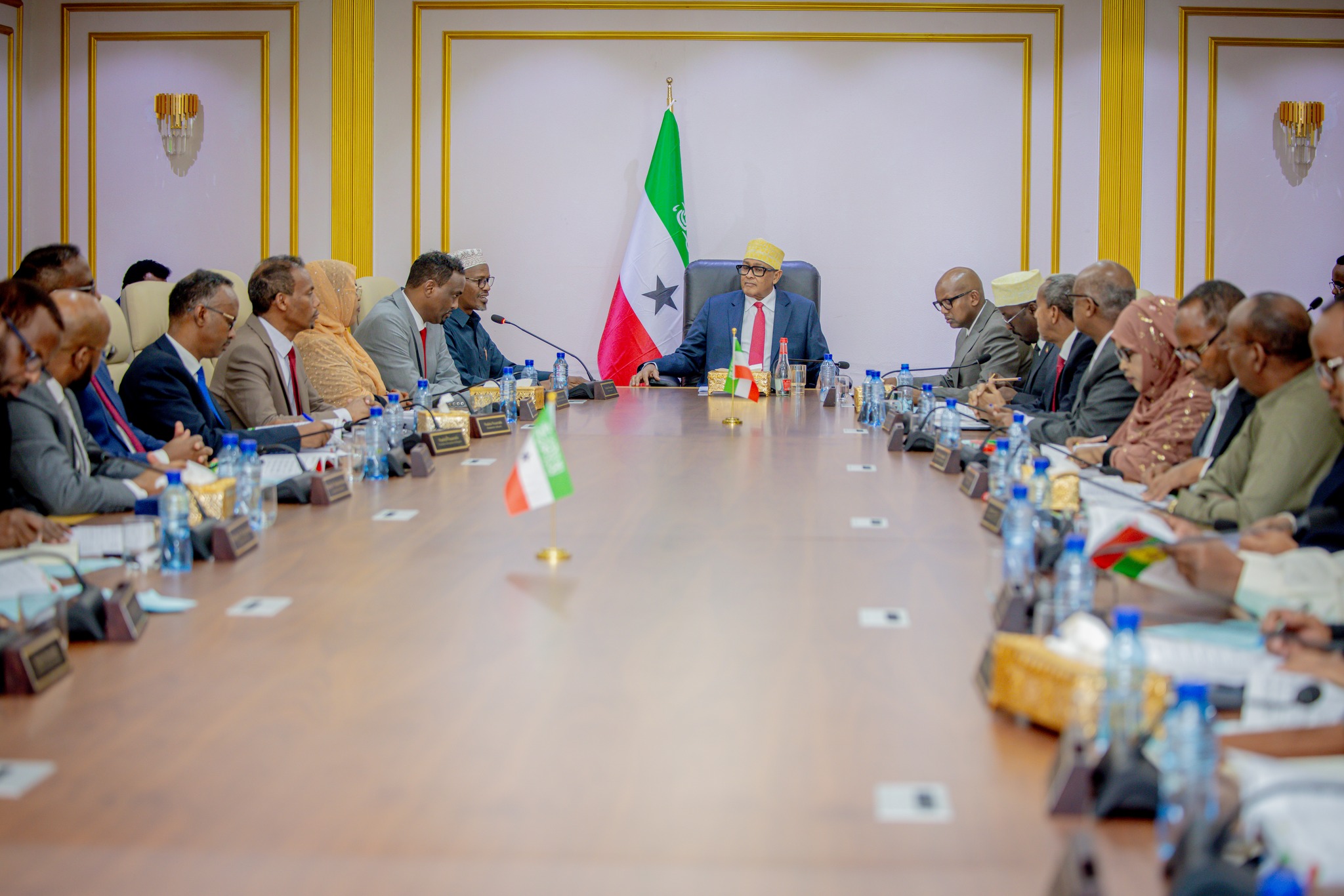

A year ago, tens of thousands of Somalilanders queued under the sun to cast their ballots in one of the most consequential elections in Somaliland’s recent political history. The incumbent, widely unpopular and politically embattled, faced the main opposition candidate, Abdirahman Mohamed Abdilahi, who managed to unite an eclectic coalition bound by a single political mission: unseating President Muse Bihi Abdi.
This alliance, comprised of politicians, clan elders, business elites, and activists from across the ideological spectrum, was never built to last. It was a temporary, uneasy pact motivated not by shared vision but by shared dislike of the incumbent, each group driven by its own grievances and expectations.
When Abdirahman Mohamed emerged victorious, the result was heralded as yet another testament to Somaliland’s resilient, if fragile, democratic experiment. International headlines were celebratory, and at home, the public felt genuine pride. But behind the celebrations lay an unavoidable question: now that the coalition had fulfilled its purpose, who among them would the new president inevitably disappoint, and would he have the courage to choose a path guided by national interest rather than political debt?
A squandered transition
The National Electoral Commission officially announced the results on 19 November 2024, though the outcome had been clear long before, thanks to widespread leaks from polling stations and regional centres. Between the announcement and the inauguration lay a crucial period, time traditionally used by a president-elect to reflect, strategise, vet ministers, and prepare for decisive early action.
Instead, that precious window was wasted.
Rather than using the transition period to assemble a capable leadership team, the president-elect embarked on a round of publicised meetings with clan leaders. One after another, they congratulated him, then demanded ministerial positions for their subclans. These scenes, widely shared, raised early concerns. They signalled not only a lack of preparation but also a troubling prioritisation: clan interests above national governance.
A cabinet built on loyalty and clan influence
The inauguration, originally scheduled for 13 December 2024, was moved to the 12th because the 13th fell on a Friday, a day of Muslim congregational prayers. On 14 November, the newly appointed spokesperson announced the formation of a Cabinet of 48 individuals: 28 ministers and 20 deputy or state ministers. This number exceeded even that of the previous administration and was wildly disproportionate for one of the world’s poorest economies.
Worse, the new Cabinet was populated largely by inexperienced and unqualified individuals whose primary credentials were clan backing or personal loyalty. The public, who had hoped for a decisive break from the past, felt instantly betrayed. This was not the transformational leadership many had voted for.
And it is worth remembering that they had given the new president a historic mandate. Nearly two-thirds (63.9%) of Somaliland’s voters had chosen him, an electoral margin unmatched in the nation's history. It was a rare moment, a golden opportunity for deep and meaningful reform.
Instead, it was squandered.
Without a Plan
The dysfunction visible today stems from a deeper problem: the president entered office with no written governing strategy. Despite spending more than a decade in opposition, ample time to craft policies, frameworks, and priorities, his administration began without a clear roadmap.
This absence of planning left the Cabinet directionless. For an entire year, the government failed to deliver significant progress across major sectors. The first year of any administration is the period of greatest opportunity, when political momentum and public goodwill are at their peak. Instead of building credibility, the government drifted. Instead of shaping reforms, it reacted to crises.
Borama: A symptom of systemic failure
The events in Borama since Thursday, 4 December, underscored the severity of the problem in the government. Demonstrations triggered by contradictory and poorly communicated government decisions spiralled into tragedy. Nearly twenty civilians lost their lives, and dozens were wounded, many critically.
What unfolded in Borama was not merely a localised error. It was a manifestation of a larger national governance crisis: weak communication, incoherent decision-making, and a government unable to anticipate or manage public response. The government’s failure to articulate a clear position, coupled with internal divisions, turned a manageable situation into a deadly incident.
A wear lost, but not beyond repair
Somaliland entered this new political era with immense hope and a rare democratic mandate. One year later, much of that hope has dimmed. The administration has struggled to articulate a vision, build a competent team, or rise to the moment history offered.
Yet the story is not finished. A year has been lost, but the term is not over. What remains to be seen is whether the president can break free from clan politics, abandon the comfort of loyalty-based appointments, and finally offer the leadership he promised.
Somaliland deserves a government that matches the people’s aspirations, a government that recognises the weight of the trust placed in it one year ago.
Guleid Ahmed Jama is a lawyer based in Hargeisa, Somaliland.
X (Twitter): @GuleidJ

Opinion: A year after the ballot: Somaliland's missed opportunity for real change
Hargeisa - Opinion piece by Guleid Ahmed Jama.